
Co-production Sandwich
Lots of people ask us 'where do we start?' and we find it hard to get beyond, 'start chatting more to folk'. To try and be a bit more helpful, we share the idea of the co-production sandwich. It's nothing new really as many people who have written about co-production have talked about levels of co-production, both in terms of the co-production ladder and the idea of co-production happening at a strategic, day to day and individual level. We turned those levels into a sandwich – obvious really, but it really helps us to think about co-production and how we go about it.
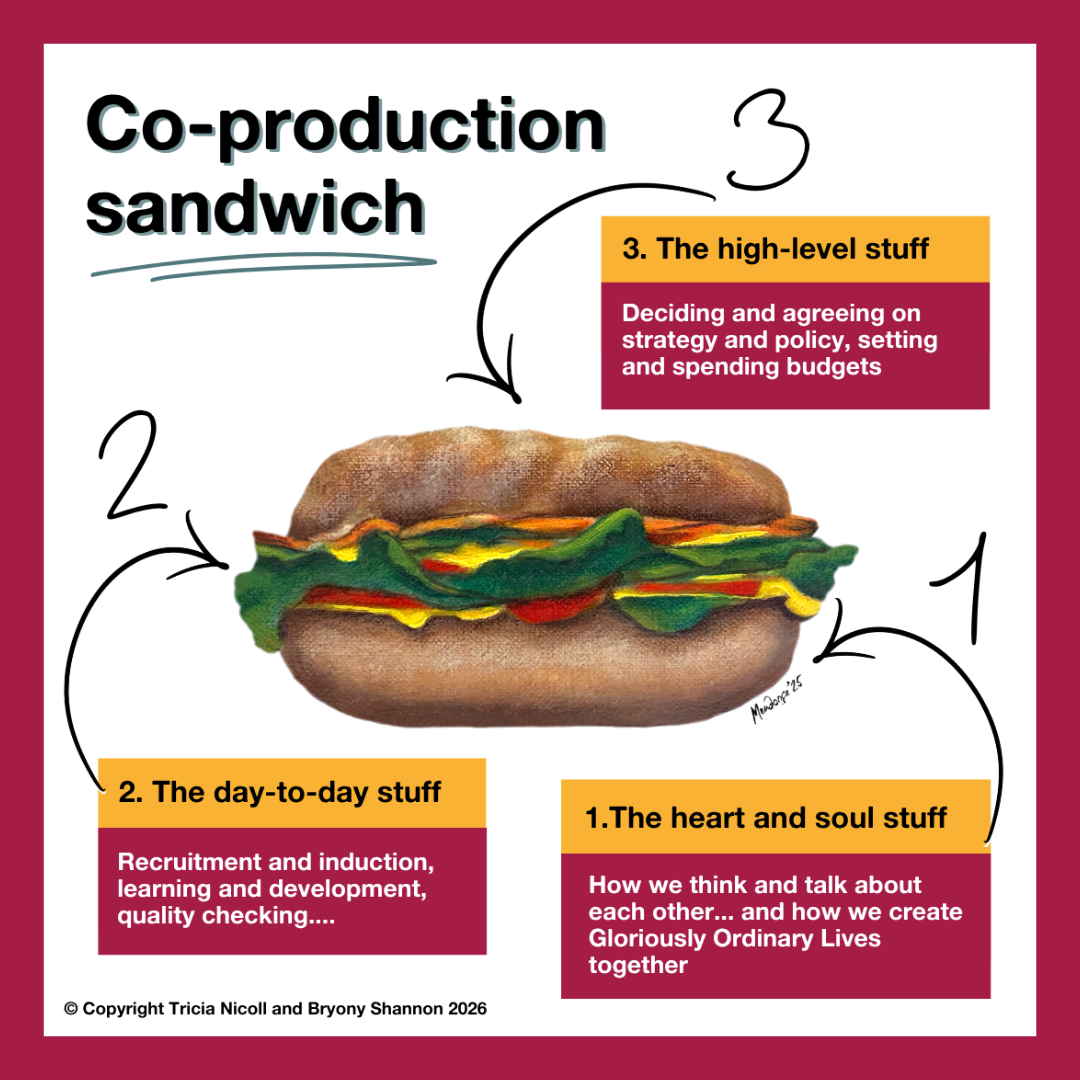
1. The heart and soul stuff
If you want to make a great sandwich, you need to think carefully about your bread – you need a good quality piece of bread to get things going. We're sourdough fans ourselves but we're not going to tell you what to eat. The bottom layer of bread that you build your sandwich on is the way we think about, talk about and write about human beings. It's our day-to-day conversations with people and their families, how we think about what support planning really means. It's the work we do to help people get gloriously ordinary lives. Its critical. If you don't have that solid layer in place, then the rest of the sandwich is not going to work. If it's not thick enough, if there's not a solid layer of really good butter, it's likely to get soggy and fall apart. We could probably take this analogy too far.

2. The day-to-day stuff
Then there is the middle bit, the filling. We don't eat meat so we've got ideas for all sorts of things that make a good sandwich that you might think are pants (barbequed tofu anyone?), but you want something good in the middle there. Something to get your teeth into. The middle bit of co-production is all the day-to-day stuff that we need to do. It's thinking about who does the work that needs to be done and how they get employed. It's how people support each other, how we write support plans. Practical stuff that is the oil in the machine. Keep it varied, and if you want to make a good sandwich don't skimp on the filling – there's not much you can't cram in there. Those messy sandwiches where the filling drips down your chin are the best.
3. The high level stuff
And then our observation would be that an open sandwich in itself is a perfectly good thing, but if you do want to put a top layer of bread on, then that layer is the big picture stuff folk like to call strategy. It's the thinking and planning about policy, about budgets and about having an overall picture about how things work. Some people are really interested in this, some people not so much. Don't waste people's time if it's not their thing. And remember in this bit of the work, it gets easy for the focus to be on the talking with (the co) not the creating (the production).
Our observation about where things go wrong? We start with the top layer of bread not the bottom. We want to make sure co-production is happening where we live and work and we think, 'let's make sure we start thinking about involving people in our new plan for (insert name of policy document)'. In our experience if we start from this position, we might end up with a great strategic co-production group, maybe with wonderful, committed people who love the strategic conversations and will help you get into some tough conversations with your elected members. Fantastic. You can, however, have a brilliant strategic co-production group and still have social workers having conversations that involve whether or not someone can have an extra £30 a week in a personal budget or whether someone's direct payment really should be used to go swimming and if that's actually a need not just a want. If we start with the top layer of bread, we aren't always paying attention to that bottom layer on which co-production is built……and then you'll have a horrible sandwich.
We hear a lot of, 'yes buts' as well. 'We're not ready yet, we have to get our own house in order' …… 'we want to write a strategy first'. Get over it.
So, if you're looking to reimagine your world, start by taking a look at how everybody who works with you thinks about, talks about and writes about people. Is there evidence of people getting Gloriously Ordinary Lives? Don't skip this and do it with a forensic attention to detail. Then look at your everyday processes, the stuff that is the engine room of your organisation; the process by which you employ people, how you create support plans with people. Are those day-to-day things happening with, by and alongside people, recognising and valuing what everyone has to offer? Then take a look at your strategic stuff and find the people who care enough to create something of value alongside you. When you ask people to work with you on strategy, be prepared to be honest. Talk about budgets, talk about policies. Talk about the stuff that you think you shouldn't talk to about anybody that feels too embarrassing or too difficult.
Oh, and the strategy for co-production? Chat to more folk.