
Two Bottom Lines and Four Tests
This stuff isn’t new.
We’re summarising some wonderful and clever people here, particularly Edgar Cahn who wrote No More Throw Away people. The Co-Production Imperative in 2000.
So, this stuff isn’t new, but sometimes it gets complicated and then we complicate it even more. Our two Bottom Lines and Four Tests are our way of trying to keep co-production real, inclusive and human …. or you could say Gloriously Ordinary!
Bottom Lines
Bottom Line One:
Nothing about us without us
This does what it says on the tin! The phrase ‘nothing about us without us’ has been used for many years as a reminder of how important it is that we can all make decisions about our own lives. It was adopted by the Disability Rights Movement in the 1990s and it is the bottom line for co-production. This bottom line makes sure that we are working with each other, instead of some of us doing things to or for ‘others’.
Bottom Line Two:
No more excuses
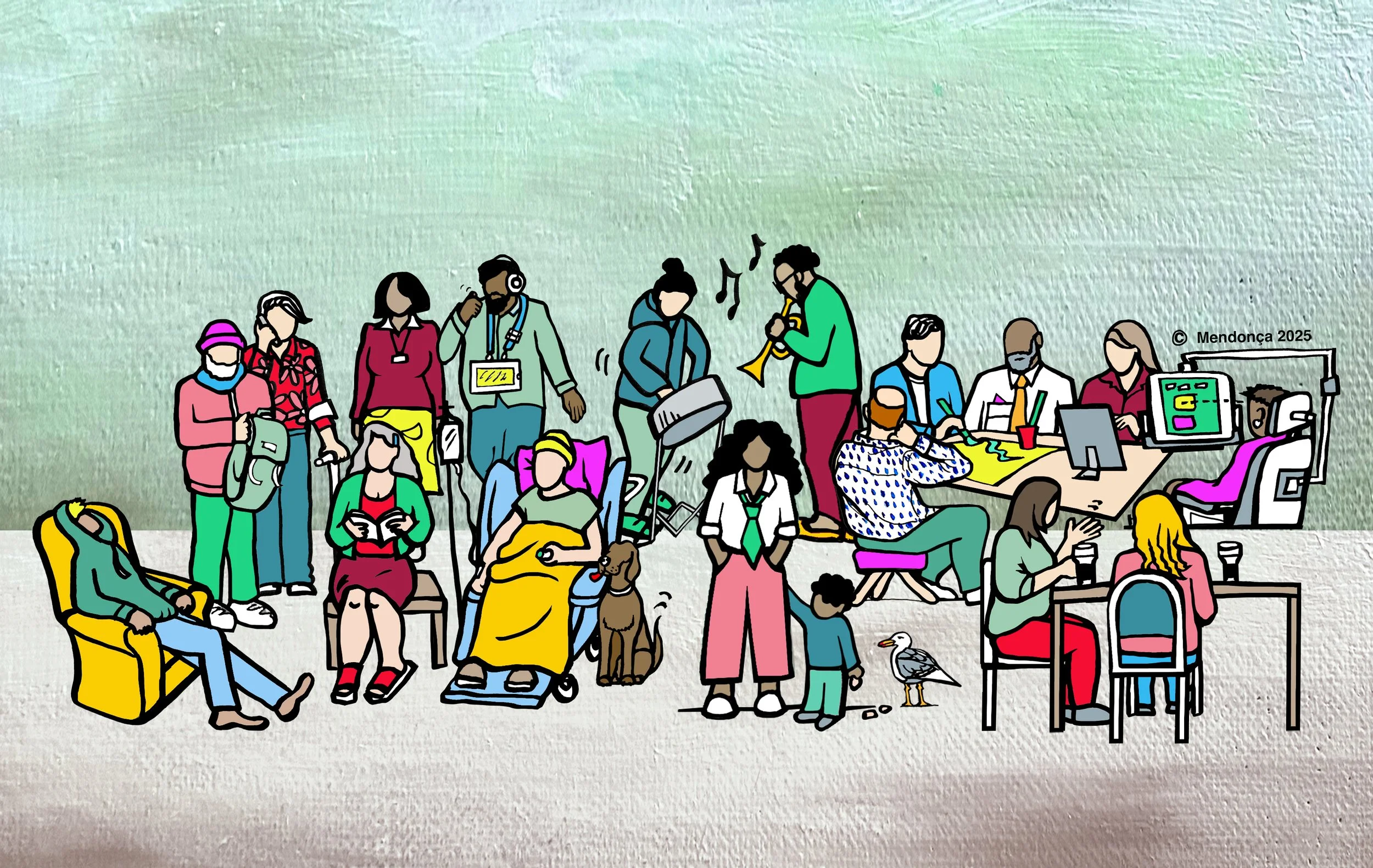
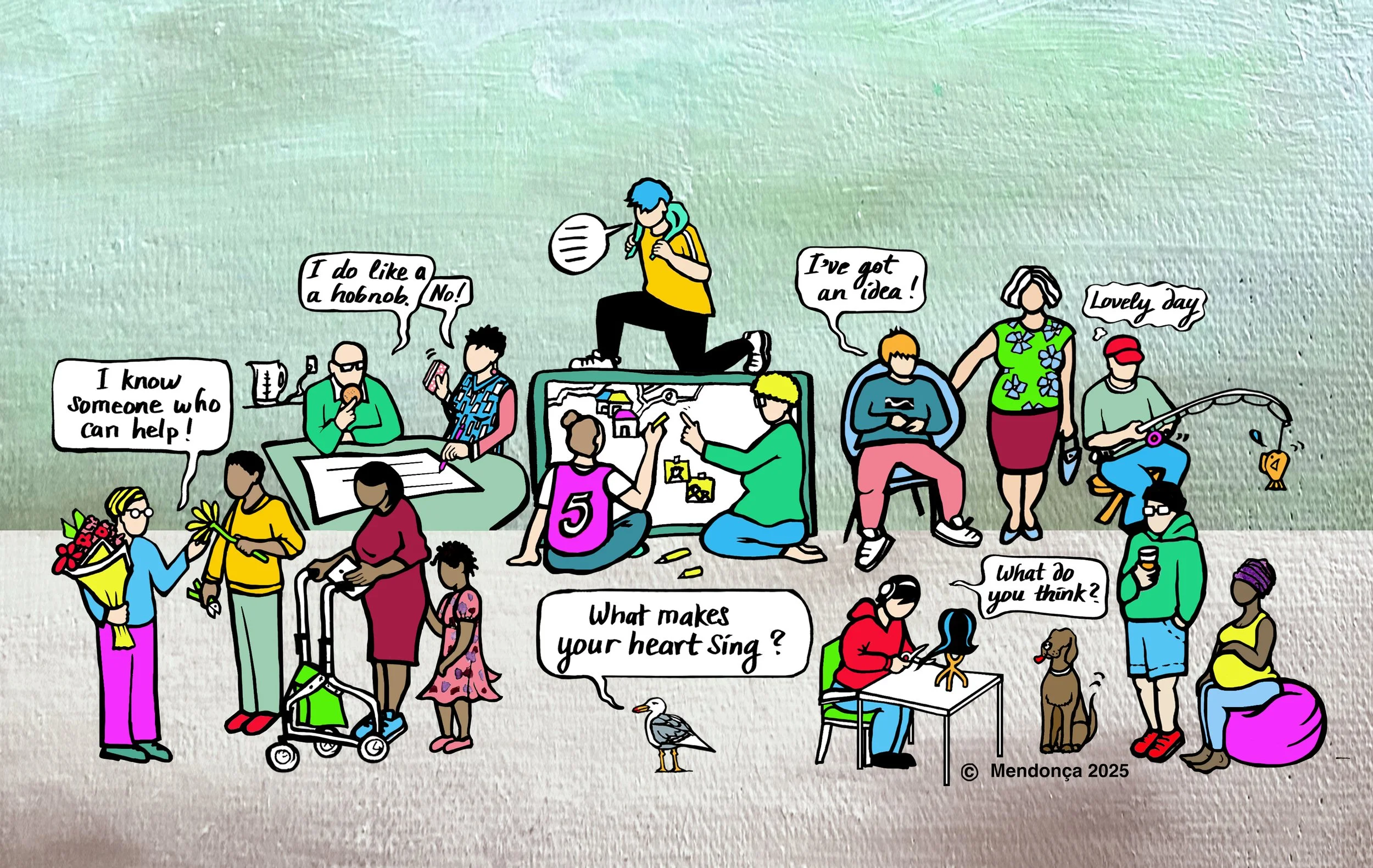
We hear a lot of, ‘yes buts’. ‘We’re not ready yet’. ‘We have to get our own house in order first’. ‘We need to write a co-production strategy’. Get over it and just crack on! Start with conversations, not agendas or plans. Talk about what makes your heart sing. Your favourite biscuits. The weather! What does a good life look like to you and your family, and how can we work together to achieve it’?
Edgar Cahn calls co-production "a different imagining of the world we know". Sometimes it's hard to imagine what that difference looks like or how it can possibly work. You won't know until you try.
Four Tests
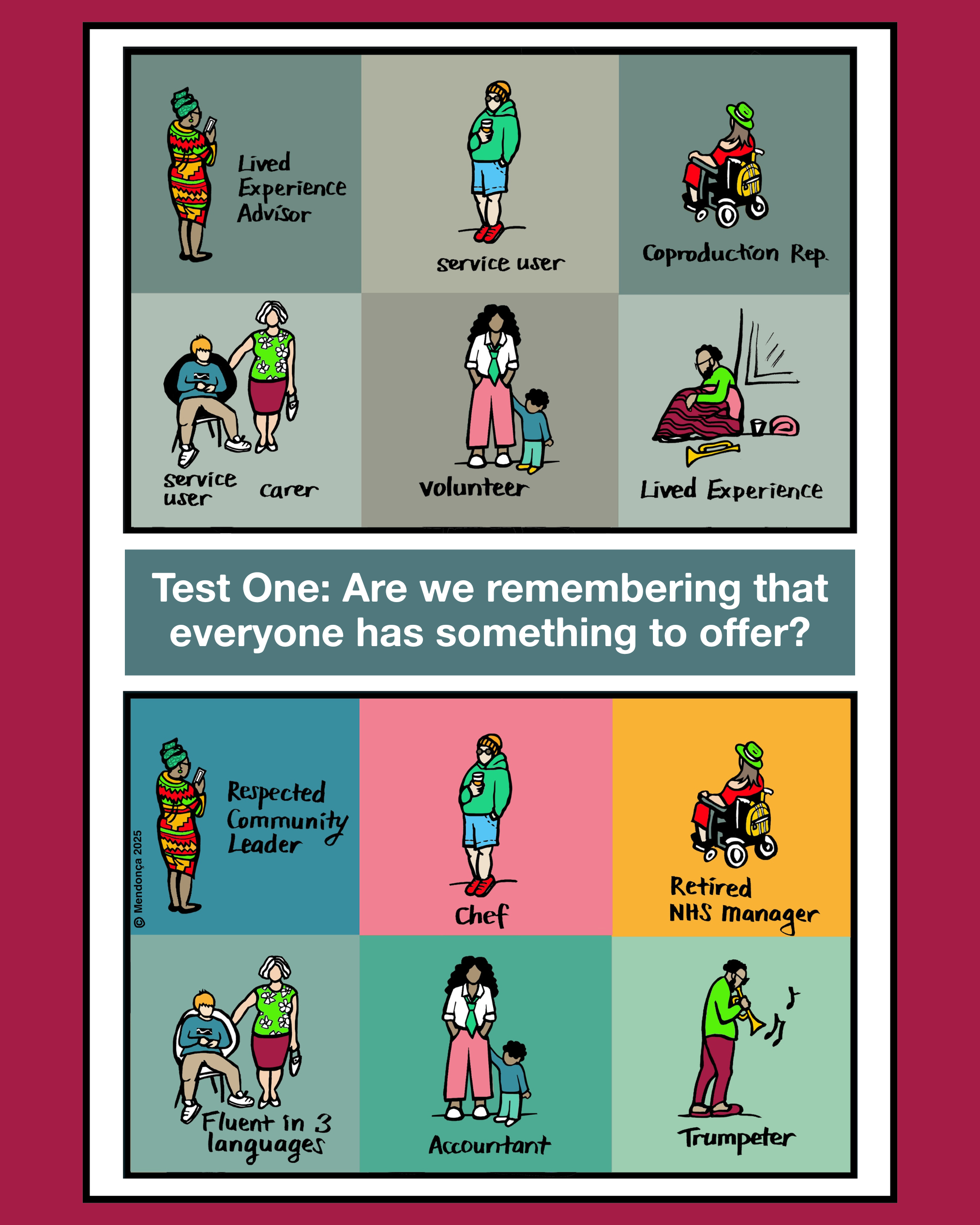
Test One: Are we remembering that everyone has something to offer?
Edgar Cahn talked about how “society treats people as throwaway objects”. How, in human services, we start from what’s wrong with people. He said (and we agree) that the real wealth of this society is its people, and we must value each other for who we are, what we have, and what we can offer. This means that we are all seen, and live and work alongside each other as partners, with a range of different and valuable experience, knowledge, skills and ideas. Test One shifts from the idea of professionals or providers asking ‘how can I help you?’ (because that makes them feel needed) to the reality of human beings creating Gloriously Ordinary Lives together.
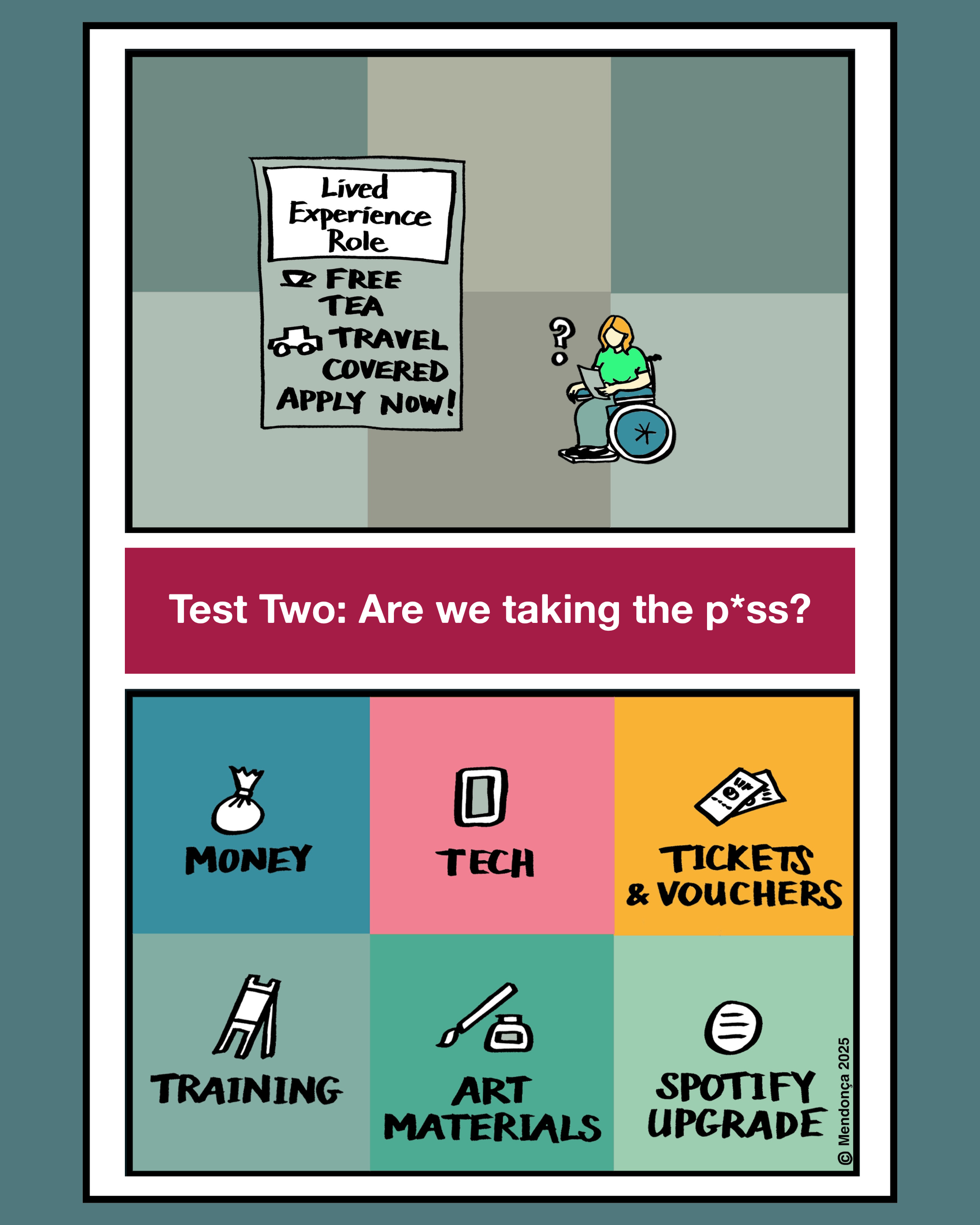
Test Two: Are we taking the p*ss?
We usually think about ‘work’ as something people do that earns money, but what about the most important work in all our lives, like bringing up children, supporting our families and friends, and making democracy work? This is ‘work’ driven by our hearts and minds, and our care, compassion and love for each other. We can’t easily put a price tag on everything. However, we often expect people to do something for nothing, to give up time for at best a cup of tea and a thank you. For co-production to be genuinely Gloriously Ordinary, we need to find ways to recognise and reward the value of work that we all do, even if that is not always through an hourly rate. Edgar Cahn says “if we need it, we must compensate it.” We sum this up as ‘recognise work and cough up’!
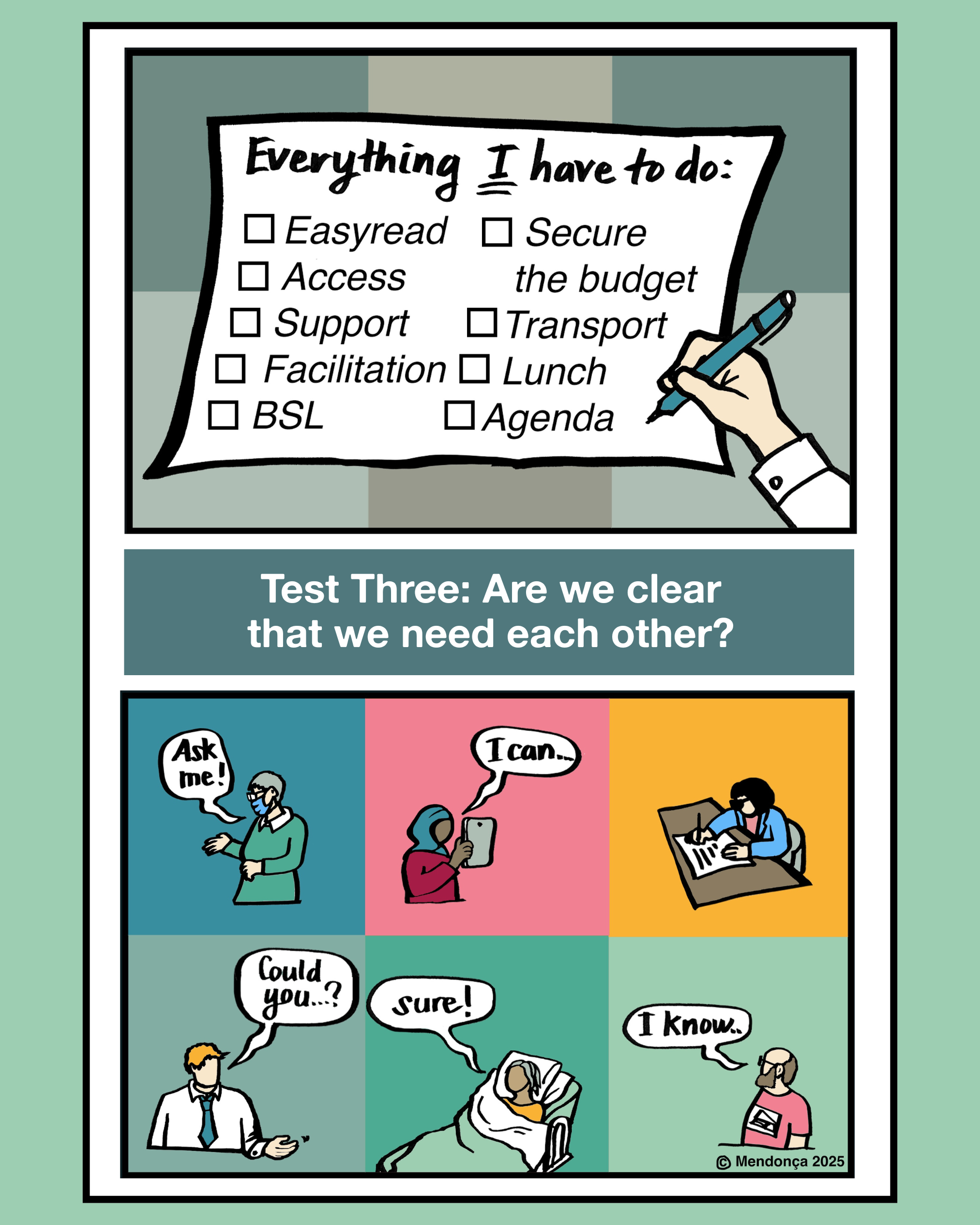
Test Three: Are we clear that we need each other?
This test is about making sure that no one is seen, treated, or expected to behave only as ‘someone who needs help’. Edgar Cahn talked about the idea of reciprocity (give and get) and the fact that feeling (and being) needed - being useful - is core to being human. Often when we require extra support to live our lives, we are seen just as passive recipients – as ‘needy’ not needed. Test three demands we stop this subtle bigotry and expect stuff from each other. When we get this right, ‘you need me’ becomes ‘we need each other’ – because we do!
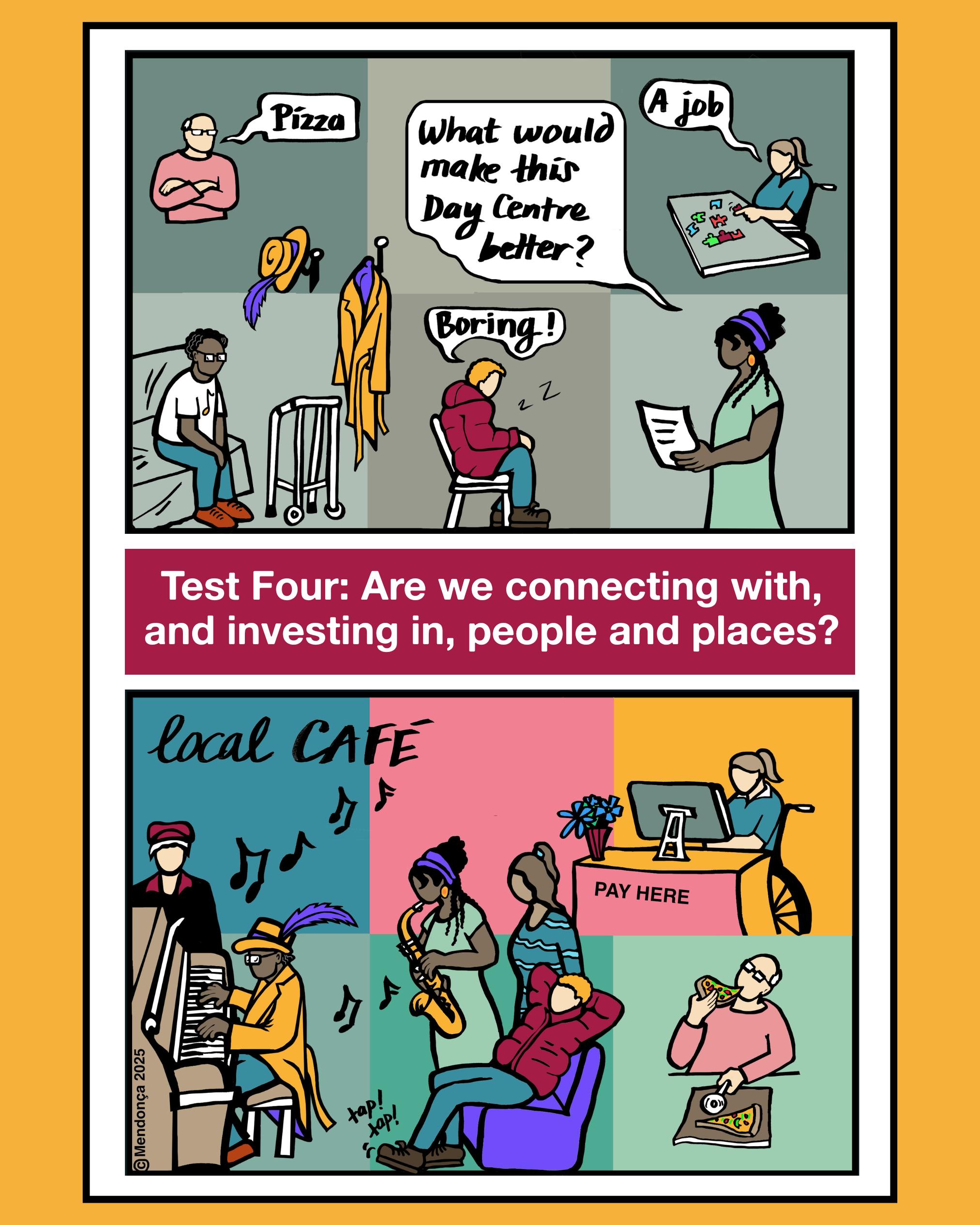
Test Four: Are we connecting with, and investing in, people and places?
Co-production is often thought about in terms of improving services. And services absolutely need to improve! But Edgar Cahn reminded us of the importance of ‘social capital’ and the need to invest in families, neighbourhoods and democracy. To invest in homes and communities, love and hope. So, Test Four reminds us to focus on better lives instead of better services. This means we create and sustain opportunities for people to connect and be human together, weaving together relationships and support for all our futures.